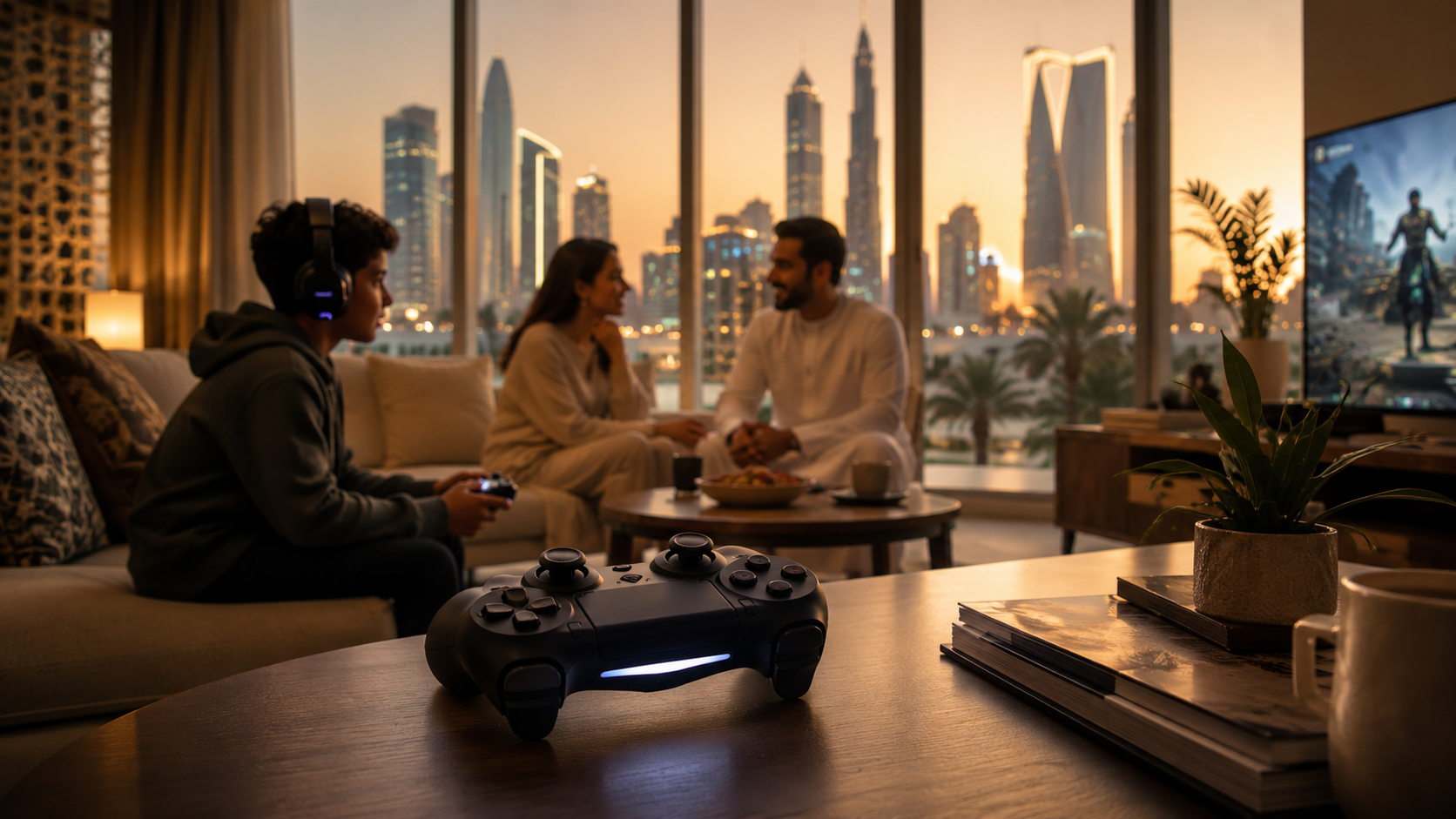
Why the Middle East Could Become One of the Most Important Markets for Family Gaming
When people talk about the future of gaming, they usually focus on North America, Europe, Japan or South Korea. Yet one of the fastest-growing gaming regions in the world is the Middle East. Countries such as Saudi Arabia and the United Arab Emirates are investing heavily in gaming, esports and digital entertainment, while millions of young players are making gaming an increasingly important part of everyday life. For the gaming industry, this is often discussed as a story about investment, growth and opportunity. But there is another side to the story that receives far less attention: families.
A New Generation of Players
The Middle East has one of the youngest populations in the world and some of the highest levels of smartphone adoption. Gaming is already deeply integrated into daily life for many children and teenagers, especially through mobile devices. As the market continues to grow, more children will spend a significant part of their free time gaming, just as we have seen in Europe and North America. This is not necessarily a problem. Games can provide entertainment, creativity, social connection and opportunities to learn new skills. For many children, gaming is one of the ways they stay in touch with friends and participate in communities that matter to them. At the same time, as gaming becomes more common, families start asking familiar questions.
The Same Questions Parents Ask Everywhere
Parents in Riyadh, Dubai, Stockholm and London may come from different cultures, but many of their concerns sound remarkably similar. How much gaming is healthy? How do you avoid daily arguments about screen time? What happens when children move between gaming, homework, social media and other activities on multiple devices? How do you help children stop playing without turning every evening into a negotiation? These questions tend to appear wherever gaming becomes a larger part of childhood. They are not specific to one country or one region. They are a natural consequence of digital entertainment becoming part of everyday family life.
Why Balance Matters
One lesson that has emerged repeatedly in discussions about gaming and digital wellbeing is that the challenge is rarely gaming alone. Most parents are not looking to ban games completely. Instead, they are looking for balance and predictability. Families often struggle more with transitions than with gaming itself. Starting a game is easy. Stopping can be much harder. When expectations are unclear, daily routines can quickly become a source of frustration for both children and parents. That is why conversations about healthy gaming habits are becoming more common around the world. As gaming continues to grow, so does the need for practical ways to help it fit naturally alongside school, sleep, sports and family life.
An Opportunity Beyond Growth
The Middle East’s gaming boom is often measured in market size, investments and esports events. Those developments are important, but they are only part of the picture. Behind every player statistic is a family trying to navigate modern digital life. As gaming becomes more widespread across the region, the demand for healthy routines, clearer expectations and better support for parents is likely to grow as well. For the gaming industry, this creates an opportunity that goes beyond growth alone. The companies that help gaming remain a positive and sustainable part of family life may also be the ones that earn the greatest trust from the next generation of players.
Vision 2030 Gaming & Esports Strategy