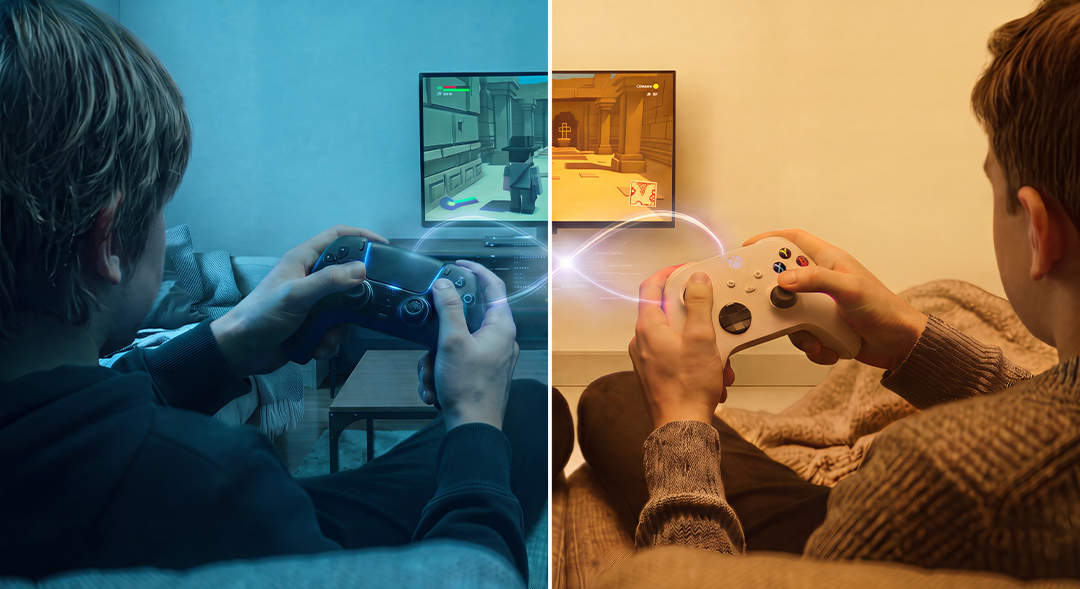
Positive Effects of Video Gaming and Social Interactions
Did you know that gaming can be a place where friendships are built and strengthened?
For many players, gaming is not simply about completing missions or winning matches. It is also about talking, cooperating, laughing and sharing experiences with other people. Research on social gaming challenges the stereotype that video games are necessarily isolating. A scientific review found that gaming can be a highly social activity and that social play can contribute positively to wellbeing.
Gaming Can Strengthen Friendships
For many children and teenagers, gaming is another place to spend time with friends. They might talk while exploring a virtual world, work together to complete a mission or simply play while discussing what happened during their day. These shared experiences can help existing friendships continue even when friends cannot meet in person. Research involving adolescents has also shown that gaming peers can become meaningful parts of young people's social networks. Through collaboration and competition, relationships formed around games can grow stronger over time. In this way, gaming can become similar to other shared hobbies. The game provides the activity, but the friendship is often what keeps people coming back.
Multiplayer Games Encourage Teamwork
Many multiplayer games cannot be played successfully alone. Players need to communicate, share information and work towards a common goal. One player may notice something others missed. Another may be better at planning, while someone else reacts quickly when the situation changes. To succeed, players often need to: communicate clearly, listen to teammates, divide responsibilities, solve problems together, support one another, adapt when a plan fails. These are social skills that can also be valuable in school, work and everyday relationships. Gaming gives players a space where they can practise them naturally while focusing on a shared challenge.
Gaming Communities Can Create a Sense of Belonging
Games can also connect people who share similar interests. A 2025 systematic review of research on massively multiplayer online games found that collective play and being part of an in-game community were positively associated with social capital-the relationships, connections and support people gain through their social networks. Gaming communities can therefore provide more than competition. They can offer a place where players feel that they are part of something. This can be especially meaningful for someone who finds people with the same interests online when those interests are not shared by many people around them offline.
Social Gaming Can Support Wellbeing
Social interaction is an important part of wellbeing, and gaming can provide another way for people to stay connected. A three-year study involving 403 adolescent gamers found that social connections around gaming played an important role in how gaming related to wellbeing. Among adolescents with stronger social capital, gaming time was associated with higher self-esteem and life satisfaction. This does not mean that gaming automatically improves wellbeing. What seems particularly important is how people play and the relationships surrounding their gaming. Playing with friends, cooperating and feeling part of a supportive community can create a very different experience from simply spending long periods gaming alone.
Healthy Social Gaming Is About Balance
The social benefits of gaming do not mean that more gaming is always better. The 2025 review of MMO gaming also found that excessive gaming time could be associated with poorer social outcomes, highlighting the importance of balanced engagement. Gaming should be one way of connecting with others-not the only one. Young people also need space for family, school, sleep, physical activity, offline friendships and other interests. At Game Limiter, we believe gaming can be a positive and social part of everyday life. The goal is not to take gaming away. It is to help families create clear and healthy boundaries so children can enjoy the friendships, teamwork and communities that gaming can offer while still having time for everything else that matters. Instead of seeing gaming only as time spent in front of a screen, we can also ask: “Who are they connecting with, and what are they experiencing together?” Because sometimes gaming is not separating people. Sometimes it is bringing them together.